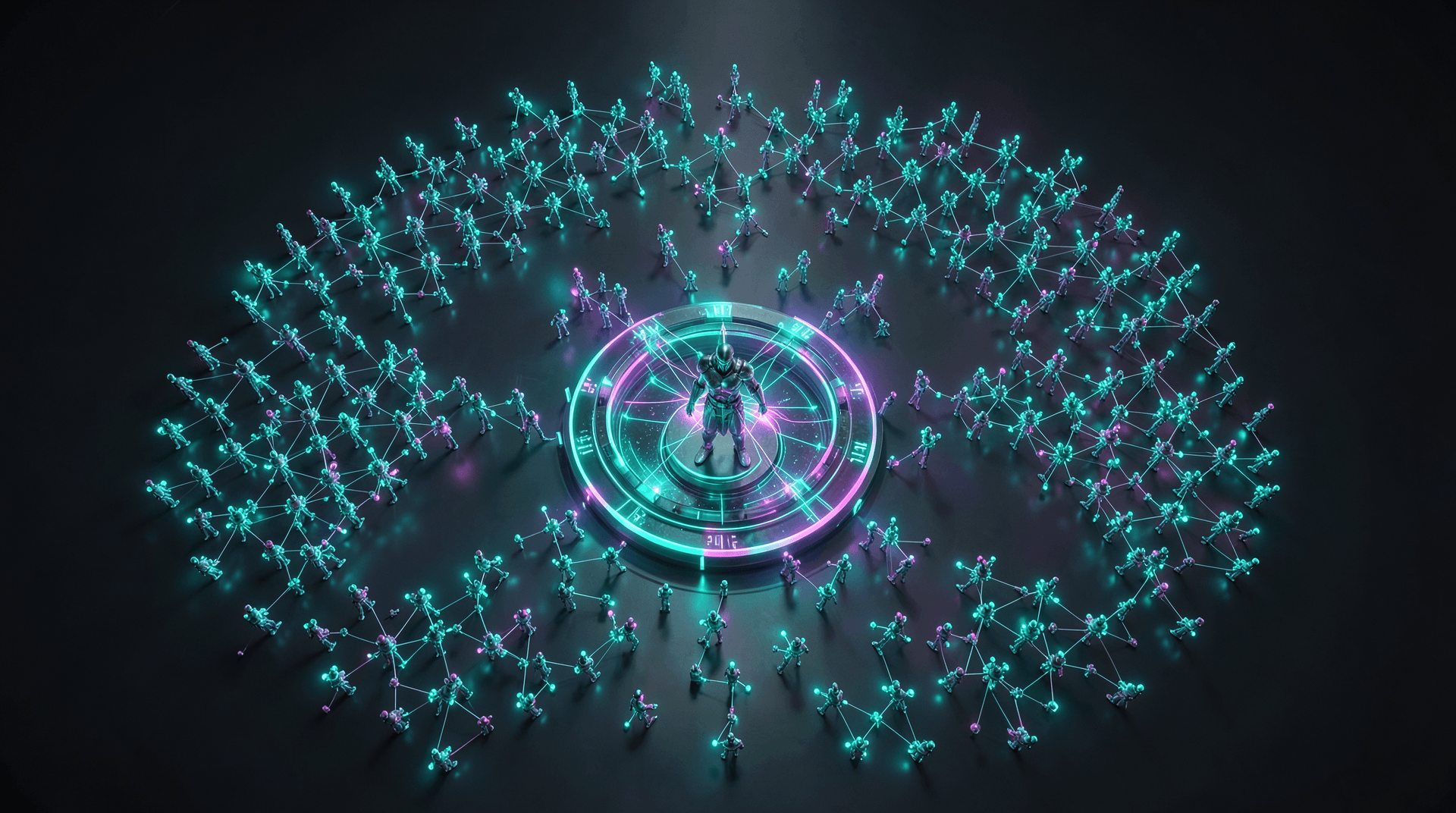
For months the most interesting race in AI was between OpenAI, Anthropic, and Google. The question was which lab would ship the most capable frontier model and which one would narrow the gap. That frame is no longer wrong, but it is incomplete. The race that matters now is the agent swarm race. China just entered it, and the scale of what Moonshot AI shipped in Kimi K2.6 is a direct challenge to US assumptions about who leads in autonomous AI systems. Kimi K2.6 released on April 20. The headline spec is 300 sub-agents coordinating simultaneously, capable of 4,000 coordinated steps in a single task chain. It is an open-source release available on Hugging Face and ModelScope, which means the model can be downloaded, fine-tuned, and deployed by anyone with the infrastructure to run it. The throughput gain on legacy code rewriting is 185 percent compared to the previous generation, per internal benchmarks published by Moonshot. These numbers are not incremental improvements. They are a step change in what autonomous AI systems can accomplish in multi-hour coding tasks.
The context for why this matters is the US market. Anthropic released Opus 4.7 on April 16 with strong solo agent performance on SWE-Bench coding benchmarks. OpenAI shipped GPT-5.4-Cyber on April 14 focused on cybersecurity tasks via its Trusted Access program. Neither has publicly demonstrated 300-agent swarm coordination at the scale Moonshot is describing. If the numbers hold up in independent testing, Kimi K2.6 represents the largest agent swarm publicly released by any lab.
The open-source angle is what makes this geopolitically interesting. Kimi K2.6 is not a restricted API access product. It is a model that anyone can download and run on their own hardware. The implication is that Chinese AI development is no longer bottlenecked by export controls on advanced chips in the way the US intended. An open-source frontier model running on Huawei Ascend hardware does not require access to Nvidia's latest accelerators, a point that has significant implications for the ongoing US-China technology competition. The compute dependency that export controls were designed to limit has been partially sidestepped by the open-source release model.